
Gaming Narration: Who is the Narrator?
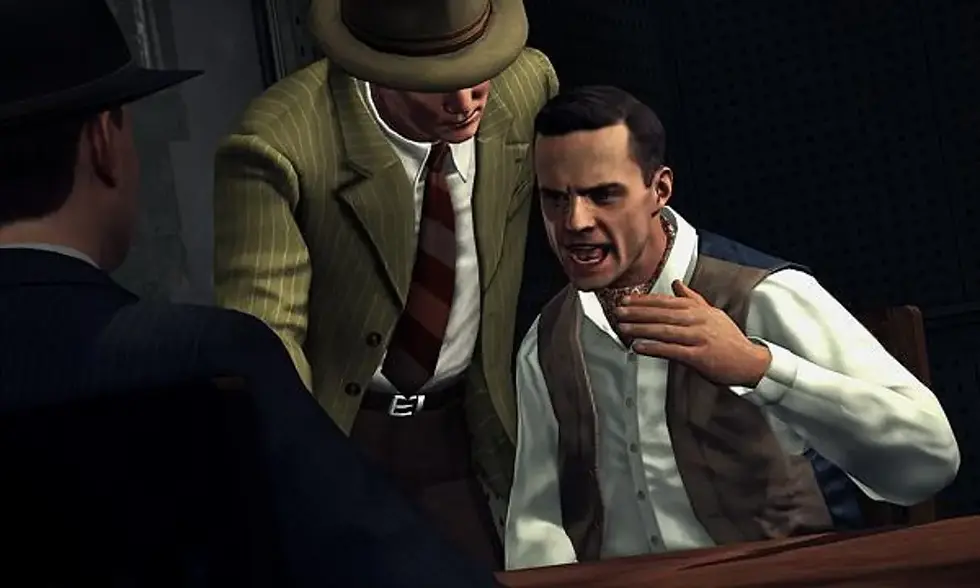
Narration, as an expositional story telling device, is markedly the most direct. In movies, it’s often reserved for stern, deeply voiced characters talking over a loud and explosive set piece. For the theatre, like a pantomime, there’s often someone perched in the wings, explaining the inner turmoil of characters before the next musical number. A narrator’s job is not glamorous, but it’s necessary. They are they to imbue knowledge onto the audience, that they might not pick up on by normal means. Narrator’s are often used in excess at the very start of a story, as depending on where the story starts, there may be a lot to be caught up on. With all this knowledge, somewhat forbidden, the ‘Narrator’ is close to Godhood. Here was me thinking that my Philosophy and Ethics A-level was just going to gather dust. This is only the disembodied type of narrator, with narration as their one and only sole purpose of the story. They are all knowing, with an intimate knowledge of the plot, past, present and future. This leads me into saying that not all narrators are created the same, or even equal. Whilst the narrator still possesses a level of levity above other characters, this narration role can too be possessed by characters inside the story as well. These have far more personal significance to both the players and possible other characters and are more grounded and personable by design. However, a narrator embedded in the story itself and intermingling with other characters does open themselves up to less narrator type characteristics, such as their personality seeping into their commentary, and even becoming unreliable and biased in their recounting or delivery. Even further than this, for one game in particular, the narrator still upholds his original role but actually becomes a fleshed out and interactable character in the game. This is certainly not the norm, but it’s a very interesting angle to otherwise observe the concept of ‘The Narrator’.
This essay will effectively cover the various definitions that a Narrator can fall under. In line with that, I’ll be looking at a few select games that I feel best accentuate the narrator’s most interesting roles. Let’s hope I don’t fall into the category of a prattling over extended Narrator, as it’s probably wise that we should crack on!

How to Piss Off the Narrator - Slay the Princess:
In a visual novel, The Narrator is king. A visual novel is effectively the throughline between a book and a movie. An immersive story focused almost entirely on delivering a narrative driven experience that you can shape into your own. Or at least making it feel like you can. Slay The Princess is the quintessential horror visual novel; there’s no other competition. After discovering it a number of months ago, it’s shot up the list in my favorite games of all time (sitting in the number 3 spot if anyone’s interested). I’ve even got the memorabilia and the art book on pre-order. Trust me, I’m a fan. Whilst I could talk about the game as a whole until the cows have come home, have their supper and are up for work the next morning, but I’ll talk about just enough to get my point across. The game starts sequentially each time, on a path in the woods. The narrator instructs you to continue towards the cabin, where a Princess that threatens all life is locked up. If she ever reaches the outside of the cabin, slipping her chains and becoming free, life as we know it will cease. Armed with this information, and your pristine blade, it is your implement to do this right, you venture into the cabin to decide her fate. Although, once you finally meet her, the choice of what to do next seems increasingly more difficult and convoluted. It’s brilliant how much there is to explore in this title, with so many variations of endings to explore. The relatively new studio Black Tabby games have truly outdone themselves with this title, with only two of them working on all the impressive vocals and visuals.
Now we’ve discussed how brilliant the game as a whole is, let’s discuss the real star of the show. The narrator is dubbed as such, plainly as ‘The Narrator’ without name, only purpose. From the very start, we know very little about him, other than the role he fills. At his core, he is our mouthpiece for every sensation, object and location described that the player experiences in the rapidly changing environment we often find ourselves in. How he defies convention from typical narrators is his insistence to outstay his welcome, sticking around to make sure the quest he has set out to us is fulfilled. He’s a bit like a nagging parent, driving every single choice we make back to the crux of the whole game. After playing numerous times, I can still hear his words swirling around my own head. “You’re here to slay her. If you don’t, it will be the end of the world”. The Narrator has no physical form and is heard by no other characters (omitting a scenario or two) and is a disembodied voice. But it is not only the Narrator that is vying for his voice to be heard, for as we progress in the game with different pathways, we too adopt new voices as a direct consequence of choices made. The Narrator too will interact with these voices, often rebuffing any of their ideas, and lording his knowledge over you, demanding unwavering loyalty to him. There is of course no hierarchy of the voices inside the ‘Hero’s’ head, but the Narrator and one other voice are the only two that are consistently with the player, speaking on the same topic, like a broken record. But ultimately, the player has the final say and choice in your actions. Admittedly, sometimes even this is compromised.
Our player agency is expressed in this world by way of dialogue choices, as well as non-verbal commands. Every option is narrated, even if the narrator is against the decision he begrudgingly voices it all the same. However, there are some notable exceptions to the contrary, where control is stolen away from us, the player. If you choose to defy the narrator and instead try and save the princess instead of slaying her as instructed, the Narrator will fight back. He weaponizes his own narration, as his words become reality and we are almost powerless to stop him. We are presented with a plethora of options, an almost exhaustive list of ‘Slay The Princess’, but for diligent players there is a single options to ‘Resist’ his commands and the urge to carry out his bidding.
A scary concept, nonetheless, but exceedingly interesting in what could be considered the limit or true extent of his power. It’s a juxtaposition between the Narrator’s normal, passive role, and the becoming an active force to be reckoned with, playing us like some sort of puppet. It does beg the question, if he’s capable of such manipulative strategies, why not simply puppeteer us into completing the task for him against our will? Without giving too much away, the player character has more power than it might seem, and the game itself is hiding a lot more behind closed castle doors.
As we’ve discussed, a narrator fulfills the impartial role of reaching the audience and acting as a storyteller, like your parent reading you a bedtime story. Our Narrator here rebuffs these norms by having a personality, droning on incessantly about one particular goal, the namesake. Supposedly he exists as an entity in the world, same as the player, as his convictions for asking us to follow our task concerns him, just as much as the colossal consequences do as well. He can grow irritable, frustrated at dismissal or general dithering, and can be sarcastic in his delivery. One of the scenarios that exemplifies how fallible the narrator actually comes from the vaguely new ‘Pristine Cut’ of the game, adding additional content. Your decision to fall in love with the princess lands you in a secluded empty castle living out your days with her. Each day is filled with revelry of extravagant games and meals. But with each meal you find yourself just as hungry, and each game is fun but soon lacks depth, and entire experience is marked by waning affection. It is now that the Narrator grows to be uncharacteristically quiet. It’s revealed that despite his earlier misgivings, he actually decides to stand with the player and accepts the strange but pleasant reality. It shows that despite his unwavering resolve; he too is not immune to the feelings of the heart. Now whilst it does end up being that you’re more captured than enraptured, this doesn’t take away from the point.
It’s hard to know what the Narrator is really thinking. More often than not, he withholds and fails to disclose any specific pieces of information about our goal. Our many voices in our own head make attempt after attempt to wheedle it out of him, but we are continually told we have to just trust him that we are making the right decision. One of the few times when we get a strong sense of what the Narrator would do in our situation is the scenario simply dubbed ‘The Princess and the Dragon’. Cutting a long story short, and can’t be giving all the secrets away, there is a scenario where in a twist of fate of freaky Friday proportions, you wake up in the Princess’ body. Unable to make any decisions yourself you are now reduced to a voice in the Princess’ own head, not too dissimilar to the relative army you had occupying your own. You are now on the other end of the scale, as you experience a familiar scenario from the opposite end. The Narrator now mans the helm of your head, in control of your body and it’s choices. He’s grown in confidence without anyone to hold him back, and it seems as if he’s enjoying putting the Princess down a little too much. Even when he finds out that the player is trapped in the Princess, he has no hang ups about killing the both of you, as it is “Two birds with one stone”. When the narrator is freed of his narrative restrictions, he is actually rather vindictive, as killing you is outside of the quest, yet he still chooses to do it. Again, it contributes to the idea that the narrator is not as impartial as he might consider himself to be.
So, what do we know about the Narrator? He is a being of greater power, and unlike the player and princess, has a focused understanding of his influence in this world. He withholds knowledge from us for ‘our own good’ and lords it over us, constantly pulling us back to our vague task. Every time we reset, we retain our knowledge, but all other attributes of the world reset, including the narrator. It’s made clear to us from the narrator himself that he is not the same person, despite the fact that he is aware of the concept. The entire game is steeped in this constant wrestle with mysticism and higher thought. It’s a kind of game where things don’t make sense from the offset by design. This is a core concept of Godhood, which is essentially what a narrator is in a visual novel, that us simple humans cannot even hope to fathom the grand plan behind what we experience. What I can glean, however, is that the narrator as a being transcends the narrative, and his existence is spliced and spread throughout or own experience of it.
Of the Narrators I’m due to mention, he is by far the most powerful and impressive on the list. They are one of the only Narrator’s to step outside the bounds of his role and actively influence the players actions. I’d encourage anyone remotely interested in the concept to try this one out for themselves.

Quippage with a side order of Bippage – Max Payne 3
Max Payne isn’t quite your typical action hero. A veteran of the police force, and a loving wife, his life showed a lot of promise. His wife’s and child’s death drove him into a downward spiral of vengeance. Many murders and empty whiskey bottles later, Max is a shell of the man he once was. He became renown, but in an entirely different way, from flushing out criminal haunts outside of the force. Max’s most recent adventure in his third iteration of his series has Max working as a senior security detail for the rich Bronco family, but events behind the scenes work against them, putting them in immediate danger. Max, having turned to booze and painkillers to numb all of his senses, continues to keep his wit and shooting arm as sharp as they always were.
His story is broken up into two distinct time periods, past and present. Max obviously is our protagonist, but he also is our narrator offering insight into what is happening as he experiences it, as well as contributing to the context of his past. As it is presented, it feels as is Max is recounting his adventures from the comfort of an armchair or writing memoirs of his crazy and outlandish tales. It’s brilliant really, as he doesn’t offer blunt and short factoids, but gives his own personal anecdotes and witty one liners that makes you feel as if he was there. Because he was. A great example, Max finds himself in a shoot out in a nightclub, and comments on the situation as-“This place was like Bagdad in G-strings”. It’s hilarious, and remarkably actually quite accurate considering how many bullets are being thrown. The whole game is chock full of these off-hand comments, Max is firing them off as swiftly as the pistol in his hands.
It’s a refreshing perspective with Max, our main character acting as his own Narrator. When we compare him to someone such as the ‘Slay the Princess’ narrator, he is intrinsically less powerful. As a narrator, Max only tangibly exists outside of the gameplay, as we are in direct control of his movements in the game itself. He’s simply a dramatic retelling of chapters of his life. There is nothing he can do to change the events as they happen, as much as he would like to.
Max Payne embodies what I would call a personal narrator, as he narrates his own actions. As we’ve mentioned before, the game is split into two time periods, but these two periods do not affect this narration, as both are with him in either the future or outside his own experience of events. But, as we control Max, we still feel entrenched into the action, as things are still happening in real time. In some cases, this kind of narration can feel a little strange, removing tension from the scenario as we’re content with what’s coming up next.
The writers at Rockstar Games are markedly some of the best writers in the industry. Max Payne’s quips are by far some of the best I’ve ever heard, rolling off the tongue perfectly by the notable Sam McCaffrey.
So, in contrast to say the Narrator from Slay the Princess, Max is an entirely different breed of a Narrator, if you’d even want to call him that. For starters, he is not all powerful, in fact his narration has no power as he is simply either recounting what has already happened, or reacting to something only just happened. It is the Max we play, with the only agency to drive the story forward. Max isn’t even essential to maintaining the narrative a significant portion of the time, only for seeing behind the curtain of the brain of Max Payne. The majority of the game actually exists in the head of Max Payne, as he talks to himself (or even us), showing how disconnected from his own reality he is. That aside, Max to some extent is all known, but only in events of the past. But, as a Narrator he withholds this information from us, as the Narrator Max is some kind of showman. A joke and witty comment is nothing without the event that precedes it. I should know! Max is what the typical Narrator is actually like, running parallel to the story, and aiding the player in reaching an understanding. The beauty of this rendition is the quips and how personal the narration is. The narration both covers the story at large, but also Max’s own personal spin on his shortcomings.

But can we trust him? – Call of Juarez: Gunslinger
Silas Greaves is a legendary cowboy, possibly even the best in the west. He’s put bullets in every other legendary outlaw, lucky enough to have their wanted posters grace the town notice boards. He sets his drink down and draws a roaring crowd as he spins his epic tales of how he fought alongside them and put others down in in honorable duels. But is it possible this mysterious man, who has managed to evade all public legends, really gotten the best of so many great men? When anyone recounts a story, especially one as long and convoluted as this one, details are bound to forgotten, amended and just fabricated altogether. Whilst the core story stays the same, some additional elements are likely to be touched up and exaggerated. This is the type of Narrator Silas is, a Narrator that doesn’t completely earn our trust, or the trust of those he’s telling the story to.
The Narration in this game is presented as a lazy bar retelling of Silas’ great adventure, with Narration having an effect on how events play out. For example, multiple times over the run time, as Silas is telling his story the corresponding gameplay will freeze as the onlookers question the validity of the story. When questioned, Silas often rewrites the story to fit with whatever they’re saying as sometimes the prior doesn’t make sense. It’s a fun quirk and gives the entire game a more arcade style rather than any cinematic adventure. Seeing the world reshaped in front of you or reverse back in time because the Narrator made a mistake keeps things interesting and unpredictable.
The concept of an unreliable Narrator is an interesting narrative concept as well. To begin, this is largely down to the fact that Silas is narrating himself in the past tense. Anytime we tell stories in the cruel real world, with every retelling of said stories with time, elements get forgotten and exaggerated perhaps not even intentionally. By having a character in the world voice the narration, they are prone to the pitfalls of man and make these mistakes. His status as an unreliable narrator is complemented by the humorous and less than serious tone of the game. All these switches and last-minute changes are played for laughs, than having any existential purpose, and does not get in the way of the cartoonish atmosphere. If anything, this questioning narrative runs for the entire game, making it interesting in whether or not these suspicions will be confirmed.
Ultimately, I think the unreliable narrator characteristic works in this game’s favor. It works in tandem with the goofy and larger than life tone, as well as being important for the narrative experience also. Silas’ heightened versions of events are, because of lack of a better term, just far more interesting to play than perhaps how the original events transpired. No one wants to play a mediocre, normal shoot out the way it really happened, when instead you fend off an army of bandits in the forest. Silas may live in the shadow of the man he once was, or claimed to be, but as a player you can be proud of the fact that you can say with certainty that you did.

Which part of my body said that? – Disco Elysium
Disco Elysium, outside of it’s narration, is hands down one of the best games I’ve ever played. There I said it, but then again, most people have already said it. It’s renown for its storytelling ability, characters and depth of decisions and choices from so many sources. Even playing it a number of times, it still only feels like I’ve scratched the surface that a game like this has to offer. But we are interested in the narration, of which there is many, but not in the way you’d expect.
Waking up in a pool of your own spittle, on the bedroom floor with no idea of who you are, what you’re doing, or even where you are. Or what anything is, it’s all pretty new. The only comfort you have is your organs and impulses offering guidance on how to proceed. It really takes the phrase “Trust your gut” very literally when you can converse with it directly. It’s a really interesting system, not too dissimilar to the Slay the Princess voices in your head. Each follows an archetype, and chimes in with decisions or scenarios based on context. Where it is voices of Hero, Or the Skeptic or Stubborn in STP (Slay the Princess) Disco Elysium is far more conceptual. I mean, as an example conceptualization is one of them! They are recesses of the mind, and they are physical systems, it just depends what kind of character you play as. My original playthrough had myself sporting a social playthrough, meaning my narration was strictly physiological.
This works with the themes of the game as well. As our character, I refer to him as such as he starts without his name, knows nothing all and must rely on his own body. The game has plenty of comical spins as well, with witty and bantarous voices filling your head as well. Even inanimate objects get in on the fun, what I can only assume is some projection of emotion onto an object. It makes more sense than a talking tie screaming and shouting about throwing your life into the wind and fleeing your bar tab.
As far as Narration goes in this title, it’s an interesting concept to have the narration spread out across lots of different smaller voices. It means no one entity is totally knowledgeable, only piping up when the scenario pertains to them. They may have personalities, but again these are an extension of our own character and therefore not separate from us. They have the influence to extend a suggestion to what our final choice might be, but they never take control and are merely the messengers. It all works in tandem with each other and is a great cherry on top of an otherwise amazing game.

You are the Dungeon Master – Baldur’s Gate 3
Dungeons and Dragons has always been popular, ever since its creation all the way back in 1974 with it’s first edition. Now on it’s 6th rendition, fans continue to eat well as the popularity moves into the gaming industry. That’s not to say Dungeons and Dragons wasn’t popular beforehand on the smaller screen. Baldur’s Gate 2 and Divinity Original Sin were both incredibly successful in their own right. Baldur’s Gate 3 stands out in it’s own right, even winning game of the year back in 2023 showing how truly it has broken into the mainstream. Unlike the other titles on this list, I don’t think the narration does anything mechanically interesting, just that the sheer amount of it is renown. Think of this more as a baseline, a very good narrator that fills all the typical roles to mark everything else by.
So, in Dungeons and Dragons, if you’re not forever condemned to being your groups Dungeon Master, you’ll play as character of your own creation in any of the weird and wonderful worlds. Instead, in BG3, the developers are sort of like the Dungeon Master’s, leaving the narration to a nameless character. I say character, it is just a disembodied voice that feeds you the narration. This largely boils down to extra dialogue based on whether or not you’ve passed a skill check. Passed on an insight check? Find out a little more about how another character is truly feeling, maybe more scared than their bravado might have them seem. Succeed in a perception check? You might realize that all is not as it seems, and that creatures are other beings entirely. This is all the job of the Narrator, and they’re putting in work.
Just like a Dungeon Master, the narrator does seem to revel in their dictation to the player. The inflection in their voice, and how they speak about different interactions is different in tone, and it feels like they are taking a genuine interest in your situation. Not to mention the change in tone when a player takes on ‘The Dark Urge’ playthrough. Whilst in a normal playthrough your character is more often than not in the good or neutral category, the dark urge delves far more into devious acts. Again, the Narrator excels at matching this tone with their vocal talents (something I must say is shared by the entire cast) and how they extend the villainy to their vocals.
All in all, this is the most normal Narrator on the list. They are all knowing but cannot act in the game’s universe. Instead, they await our choices and act accordingly, as we wait patiently for them to fill us in.

Benett Foddy: a Narrator for your darkest moments – Getting over it
Getting over it is a game pitting the player against themselves. It’s a test of endurance. You are a man, seemingly trapped in a cauldron from the waist down, with your only means of travel to propel yourself up slopes and sharp edges with an axe for leverage. A fun game to begin with, soon turns sour as soon as you fall and lose an alarming amount of progress. In a fall, you’re unable to make any purchase on the rocks, tumbling back down to the very beginning. To greet you instead, are the distinctly Australian inspirational quotes of Bennett Foddy and voices from history. I don’t know about anyone else, but after making a mistake or being set back, I need time to stew and think things over before I get back up and try again. Mr Foddy gives you no respite. It only accentuates your failure and actually tries to get a rise out of you by capitalizing on your failure and the general unfairness of the game itself.
The Narrator of Benett Foddy is passive, but characterful. He does not have any kind of omniscience, instead he’s more like a friend commentating to the side of you, reacting to things happening on the screen at the exact time you are. It’s basically like you’re buddy to the side of you back seat gaming and telling you to calm down when you’re getting mad. But, as we’ve discussed prior, he doesn’t fill in any of the other narrator roles as such. He’s not so much driving the story forward, the agency is still in the hands of the player. He is more like a cheerleader than anything. Whilst in reality he is only a soundboard, as whenever you fall a new audio file will play. But it adds to the character of the game itself, in how the entire game is feeding into trying to annoy you, and really make your progress and final completion of the game matter.
This entry is certainly the weakest and Narrator with the least function but does exemplify that even despite his limited scope and power, he still feels real and fills a certain role in the game that feeds into the narrative as a whole.

What is a Narrator?
A Narrator, for all intents and purposes, is a God. They are beings of pure knowledge, often with the foresight of events that have come before, and what will come after. It’s just the present and contending with the audience that is the only unknown. There are plenty of variations, but unlike it may suggest, a Narrator is not always wholly biased. In fact, it seems more likely that they won’t be. As discussed, our Narrator from Baldur’s Gate 3 is by far the most grounded and rendered normal compared to the others. As just a disembodied voice with no place in the campaign, their one and only role is just to provide the vocals, and that’s it. Not that there’s anything wrong with that, as Baldur’s Gate’s has so many remarkable additions that the narration only seems normal comparatively.
Then again, more often than not, in narrative epics such as these ones the Narrator often is someone you know. No-one closer than yourself, sometimes even the protagonist. Max Payne and Silas Greaves are perfect examples of how these devices can enhance the experience by controlling a previous iteration of them. For Max Payne, it feels like we’re living through one of his memoirs, a witty retelling of some of the more action-packed moments of his life. With jokes added. Again, not breaking the mold by any definition, but it’s included simply for Rockstar’s amazing writing, and the inner psychological narration of the saddened Mr. Payne. Silas Greaves instead, is the exact opposite. Up to this point, we believe wholeheartedly everything our narrator’s have been telling us. He’s a Narrator who is being actively challenged; an absurdist situation told at the Saloon that is outlandish. To some extent, Silas does warrant this treatment, as his memory is indifferent, with his story being called out and changed on the fly (which does make for some interesting gameplay).
This is the first real inkling we have of the Narrator having powers outside the world of simple story telling. Slay the Princess’ Narrator takes this to the extreme, the archetype at it’s strongest. The Narrator has forbidden knowledge, and is with you every step, every room and describes the entire environment as it is to be seen. When you act against his wishes, with much opportunity to do so, he will actively take control away from you to sway you back ‘on track’. He’s quintessentially the most proactive Narrator, shirking this role many times over to break the bounds of reality.
I guess in writing this, I have to become a narrator!
Thank you again for reading, and have a great day!


Comments